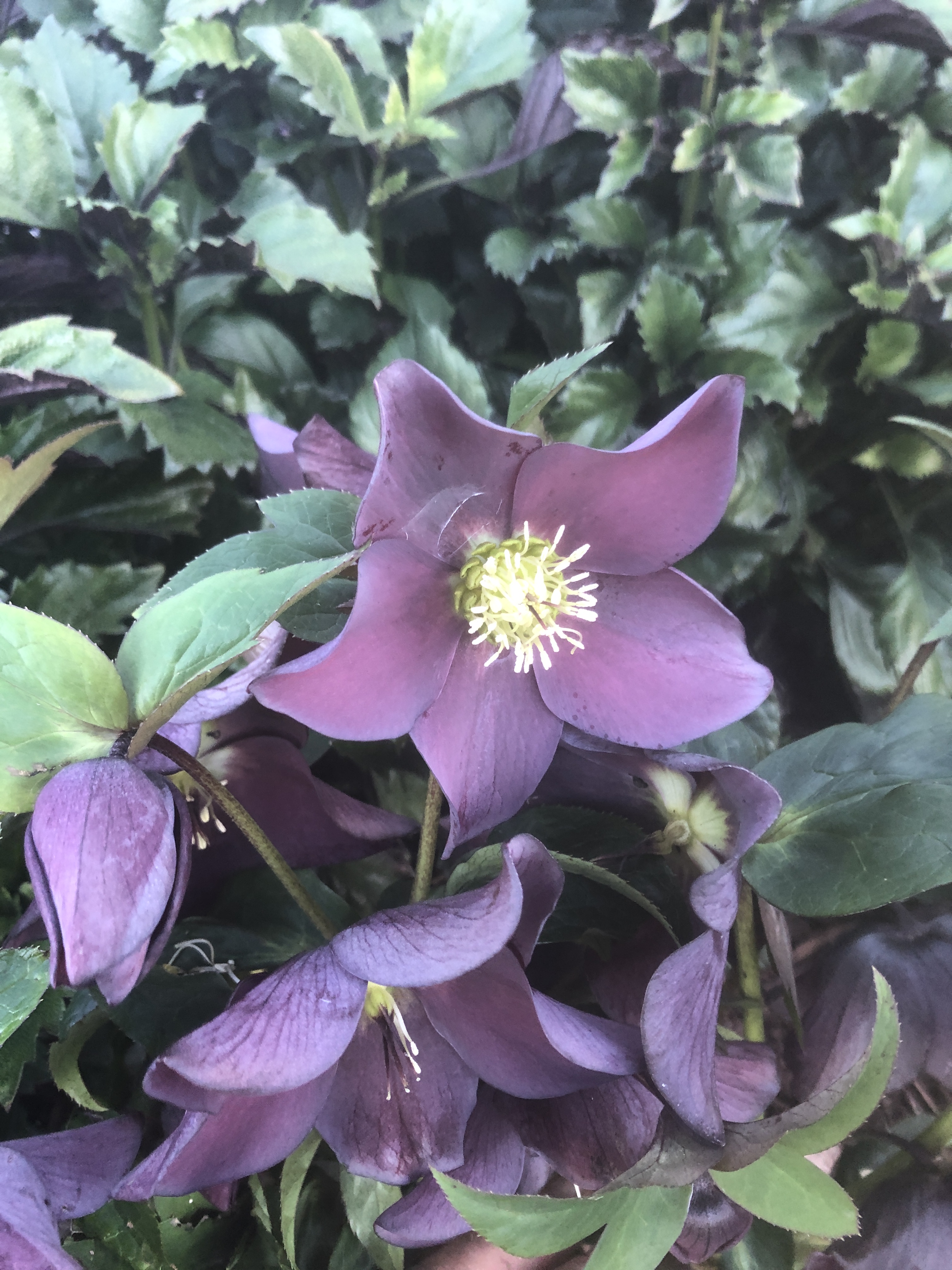
It seems odd to say this, but one of the joys of curating a maturing garden is the presence of shade: particularly the shade of deciduous trees and shrubs. Plants that adore this niche are in themselves quite adorable.
There are many woodland plants that make the most of the winter sunshine.They carry out many of their biological functions while the canopy is clear, making use of the light to photosynthesise and to use the resultant energy to reproduce. It is also while the limbs above are bare that seedlings, from last year’s seed that has been awakened by the cold, emerge in little clusters between established clumps.
Today I am talking about the more common evergreen perennial hellebore hybrids (Helleborus xhybridus) that have developed from the acaulescent species such as H. orientalis, H. viridis, H. atrorubens etc. (Acaulescent means they don’t grow a stem.)
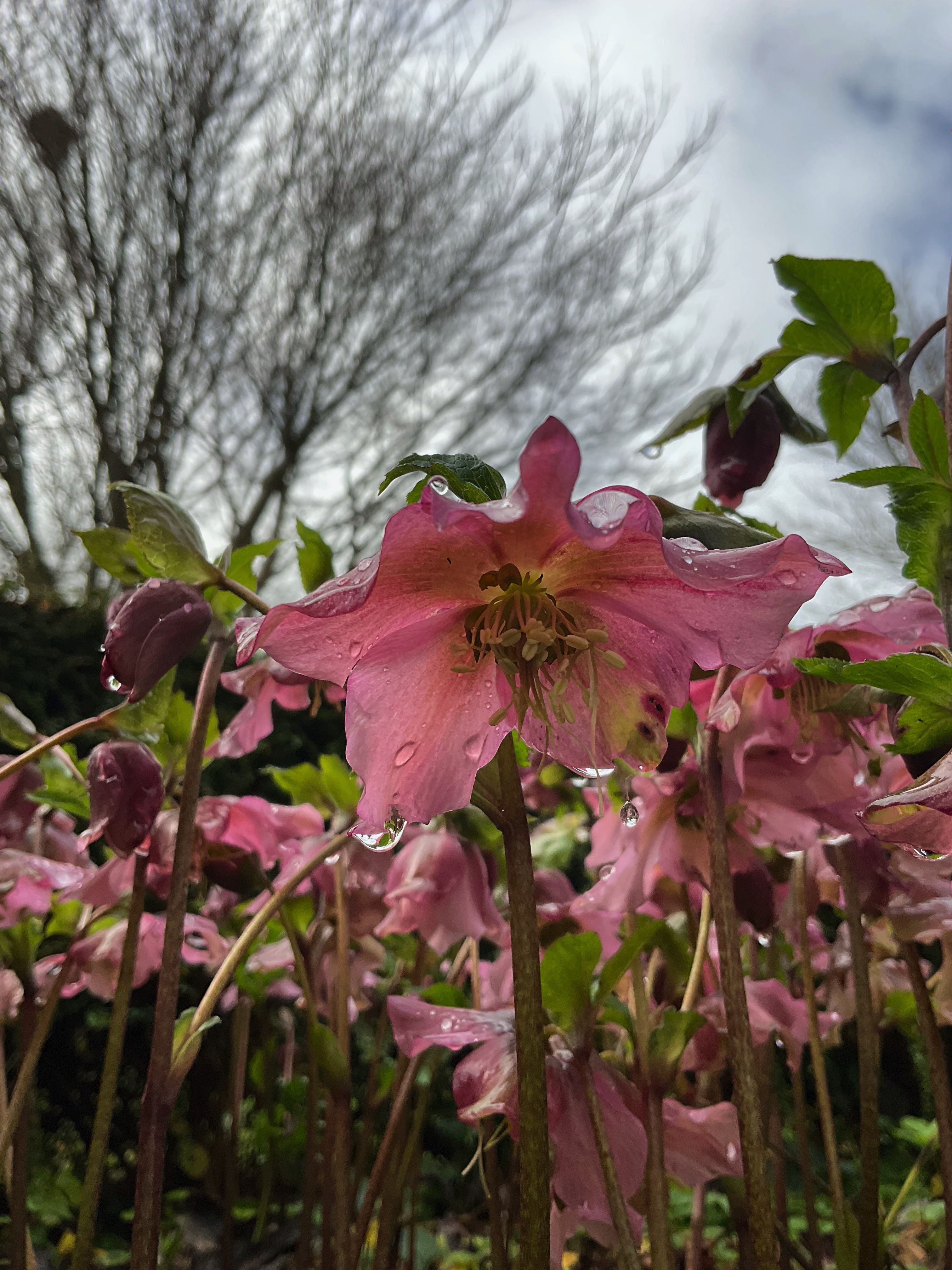
Why are these hellebores so popular?
Their flowers are beautiful. They flower in winter. They flower over a long period. They are seemingly immortal. It is hard not to have success with them (as long as they get some moisture over summer), their foliage is green and glossy and interesting even when they are not in flower and they form a dense weed excluding ground cover. They will happily grow in the rooty soil beneath trees. There is an endless variety in the flower forms that are available. And they are easily maintained (they do need some maintenance, if they are to look their best, but more of that later).
I was given a tray of seedling hellebores twenty years ago by my friend and gardening mentor John Grenville from his own garden. I was thrilled to find as they grew and flowered (quite quickly within two to three years from seed) that they came in a range of colours and patterns: whites with a greenish tinge, white with reddish splotches, plain pink, pink heading toward purple, pink marked with purple spots. And gradations of these colours with washes and edges and splotches and stains. At some point a named variety was introduced maybe ‘Single Plum Purple’, and it has had a little influence in one part of the expanse of hellebores beneath some Japanese maples.
There are a few nurseries around the country that specialise in these adorable plants. You might have heard of Post Office Farm Nursery in Victoria or Tasmainian Select Hellebores. Their ranges of cultivars are mouth watering.
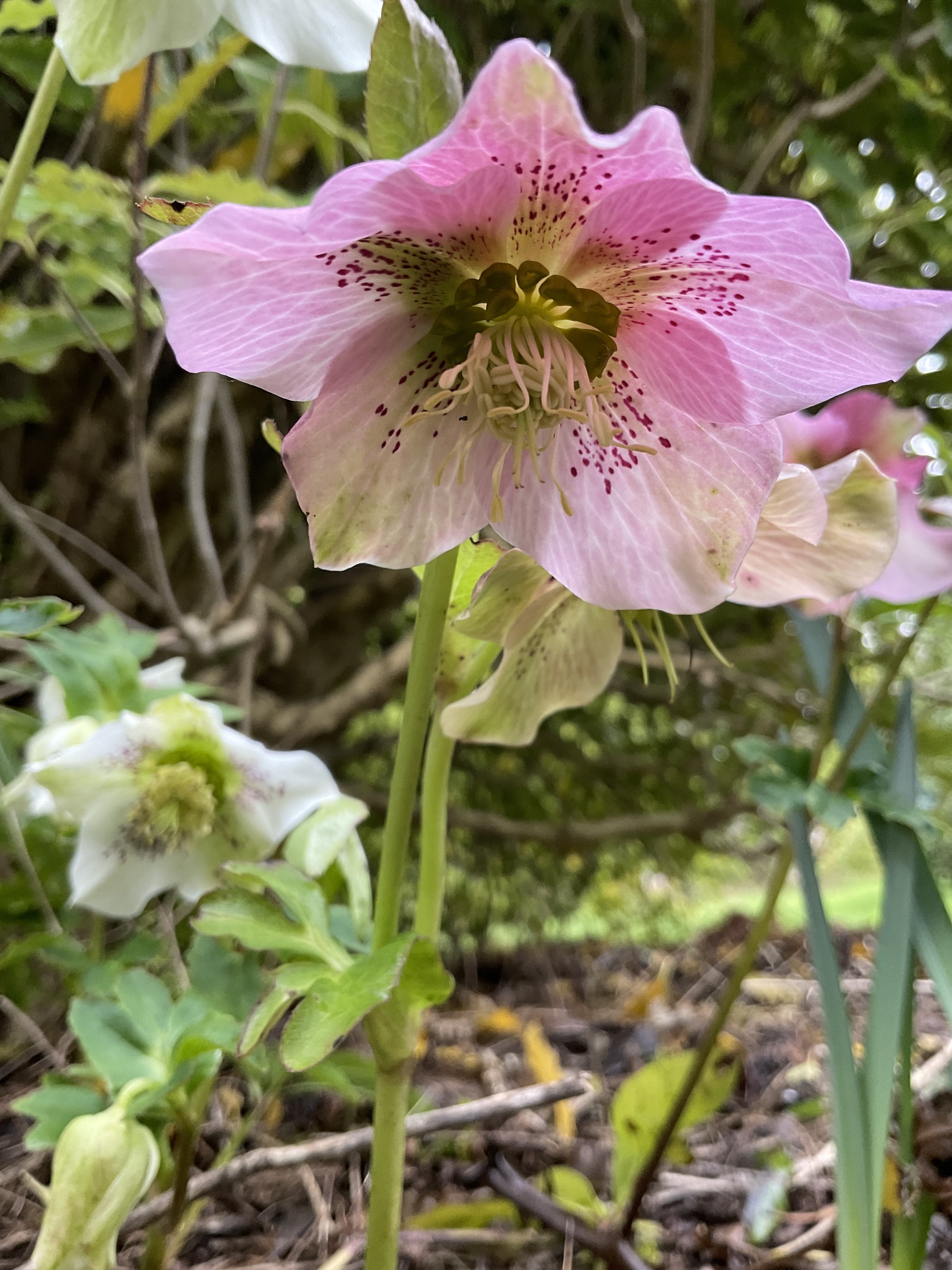
My preference though remains for the unimproved and for the simple single flowers. Even though some species have naturally occuring double forms, I find some of the pointier doubles a little too artificial and the petticoat of petal-like sepals diminishes the classic hellebore flower shape. There. I have said it.
So I think you know where you can grow them, in soil that is rich in humus beneath a deciduous tree. I suggest you apply a composted mulch each year, but don’t cover the crown, it might interfere with flowering.
Check for insect pests like aphids and scale. These might cause distortion in the leaves and flower buds. They don’t seem to reduce the vigour of the hellebores, but I like to treat heavy infestations, with a garden oil to prevent them spreading to other plants in the garden.

The only other regular maintenance they need is an annual haircut before flowering. Craig Wilson from Gentiana Nursery tells me he mows over his larger plantings in Autumn. This removes the old leaves that can spoil the effect of the flowering in winter as they die. What about photosynthesis, I hear you ask. Well, hellebores are rather clever. They send up some brand new leaves that unfurl as the flower matures, to fuel flowering and seed production.
I wonder have you ever taken the time to bend down and have a look right into a hellebore flower’s face? It is worth getting down amongst the leaf mould in your happily maturing garden.


 Deciduous shrubs and trees look well this year. The early harbingers of Autumn are daily changing colour and now at the end of eel season some are already beginning to let their burgundy and crimson leaves fall to the ground: the claret ash and the Virginia creeper. But some are holding on to summer for as long as they can. A silver vein creeper in one garden we designed comes to mind. The trellis we put up is now perfectly covered, with dense and diffuse sections, not yet a complete takeover. The white, blue-green and burgundy are yet to give way to imminent rust.
 Also of note this year are the herbaceous perennials. Sometimes plants like Japanese windflower, Persicaria affine and P. ‘Red Dragon’, can be looking drab and wilted after a long hot summer, even in the middle of their floral display. This year, they are powering on. I have never seen so many flowers on my pink Anemone hybrida and it is a rare treat to have them rising up from a healthy substructure of dense green leaves. rather than a mess of weather beaten rags.


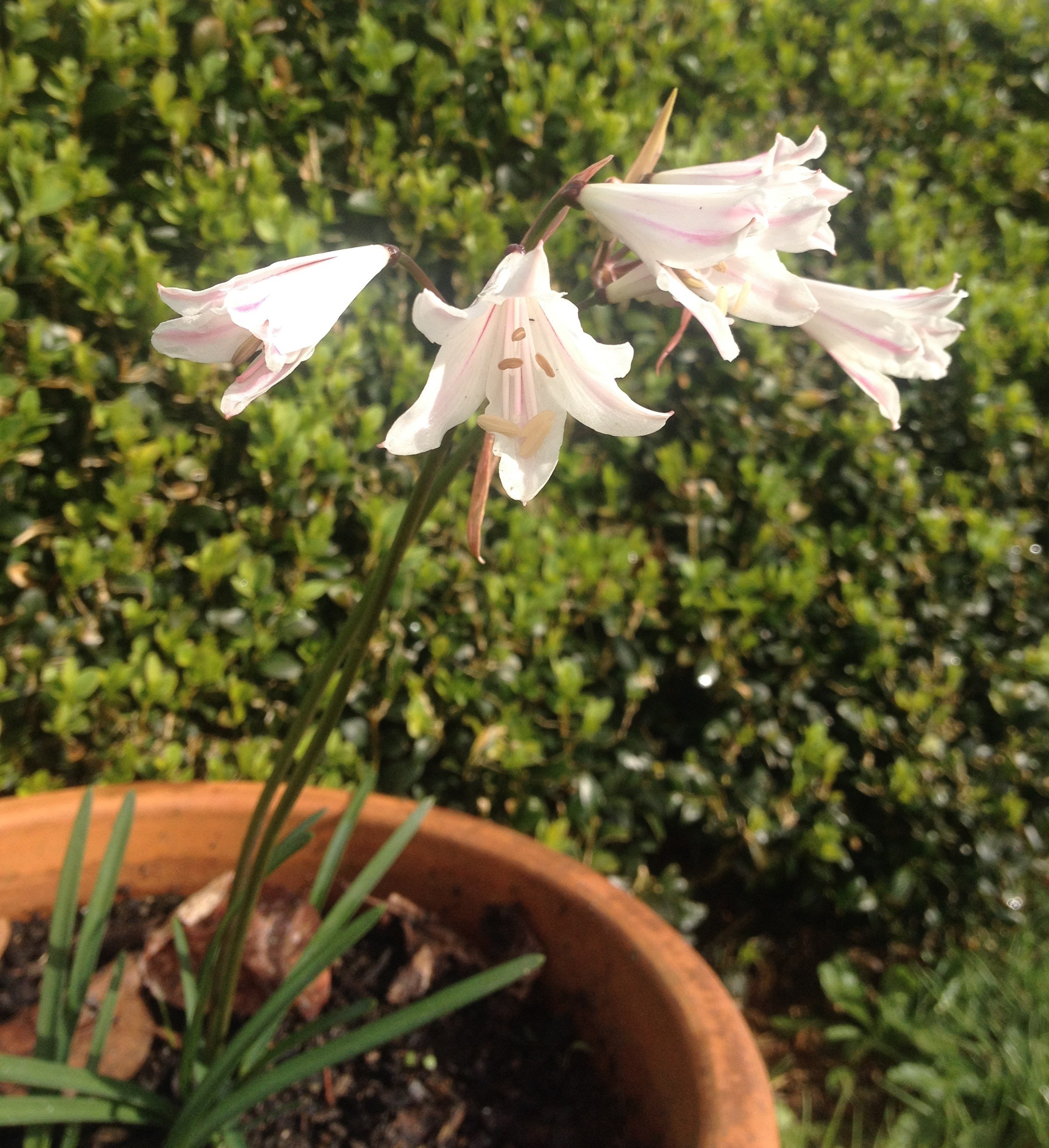
 The lurid pink flowers of a naked lady, Amaryllis belladonna, rises up from parched ground and bone dry grasses in an unmown corner of my garden. These bold trumpets on the end of slender stems create for me an iconic image. A visual moment that long ago informed my gardener’s mind. For me they have always been associated with age and neglect, of the long abandoned garden of a farmhouse that has decayed, been destroyed or disappeared. A reminder that this space was once held separate from the cattle or the sheep or the arable fields, and was cared for. It is a reminder too that autumn, here in southern Australia, is a time for the ending of things and it is also a great time of renewal and replenishment.







 Matthew Henry Gardens